What is Regulation D Rule 506?
Regulation D is a set of SEC exemptions from full securities registration: Rule 504, Rule 506(b), and Rule 506(c). Each has its own dollar cap, investor restrictions, and state-law treatment.
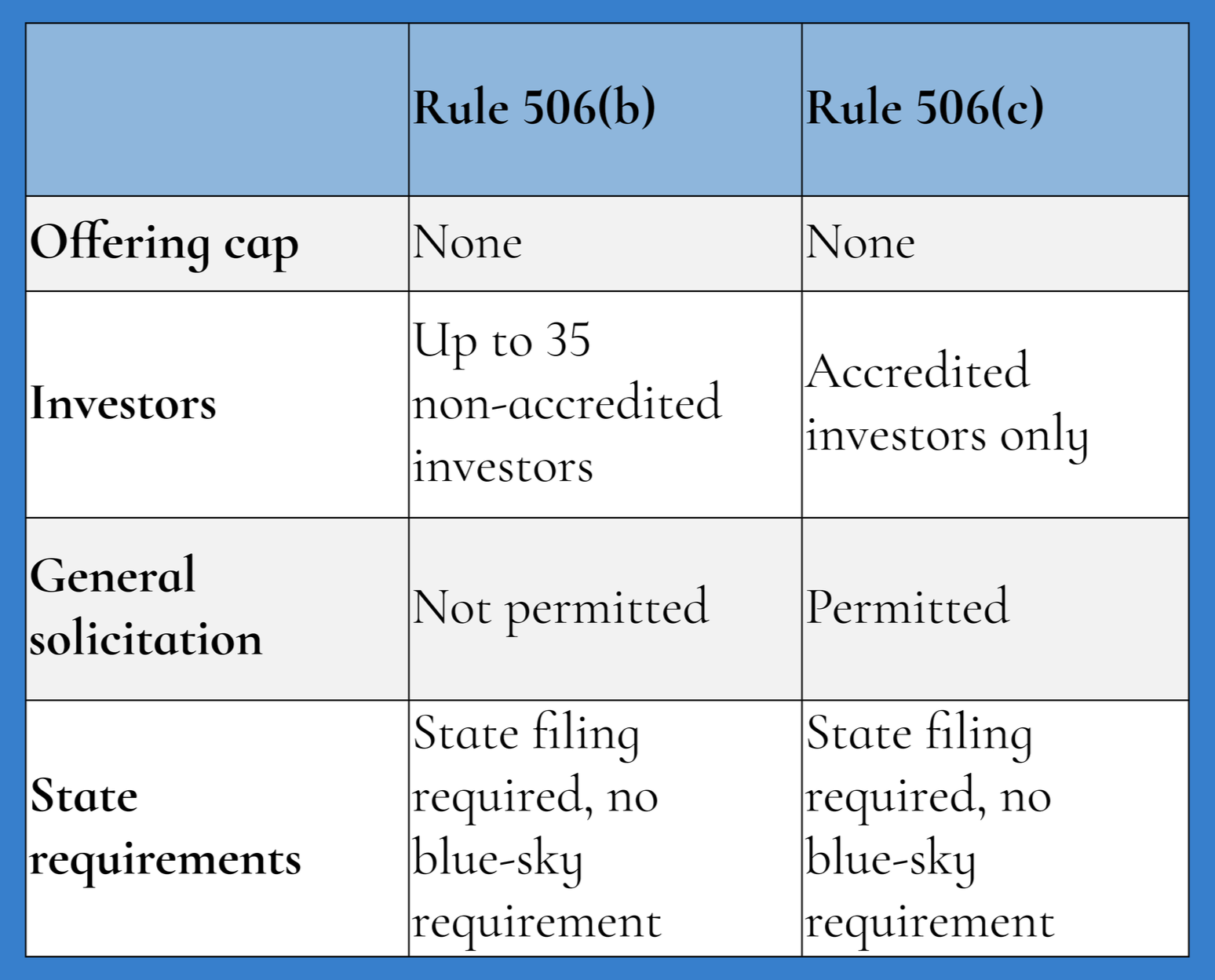
504: $10 million cap, no investor cap, some issuer limitations, state-level blue-sky requirements
Does "checking the box" prove an investor is accredited?
Many issuers believe that to prove that an investor is accredited, all you need to do is have them sign an accredited investor questionnaire, checking a box describing what type of accredited investor they are (income, net worth, investments in excess of $5 million, etc.). This raises two, fairly nuanced, issues:
(1) is checking the box enough to establish a “reasonable basis” for 506 offerings and
(2) is checking the box enough to show that you had no general solicitation in your 506(b) offering?
Reasonable Basis
Within the definition of “accredited investor” itself (i.e., you won’t find this in 506(c)) is yet another requirement: issuers have to “reasonably believe” that the investor meets one of the accredited investor qualifications. So how do you establish reasonable belief? It depends on the situation. You’ll need to talk to someone who knows this area.
No General Solicitation
506(b) does not allow general solicitation; it does not permit advertising. One way to show that you’ve not done any advertising is to make sales only to investors with whom you have a “pre-existing, substantive” relationship before you started the offering. How do you show this?
Most issuers have investors sign an accredited investor questionnaire, where the investor checks a box next to the type of accredited investor they claim to be. But merely checking the box is not enough to establish a substantive relationship for 506(b); you must go a step further. You have to have some other information about that person. And what that additional information is, as with establishing a “reasonable belief,” depends on the situation.
Here’s how CorpFin puts it: “self-certification alone (by checking a box) without any other knowledge of a person’s financial circumstances or sophistication is not sufficient to form a ‘substantive’ relationship.’” (See CDI No. 256.31.)